The Spectral Thesis
Molecular truth, instantly across any domain.
Molecular information exists in light. We just need to understand it.
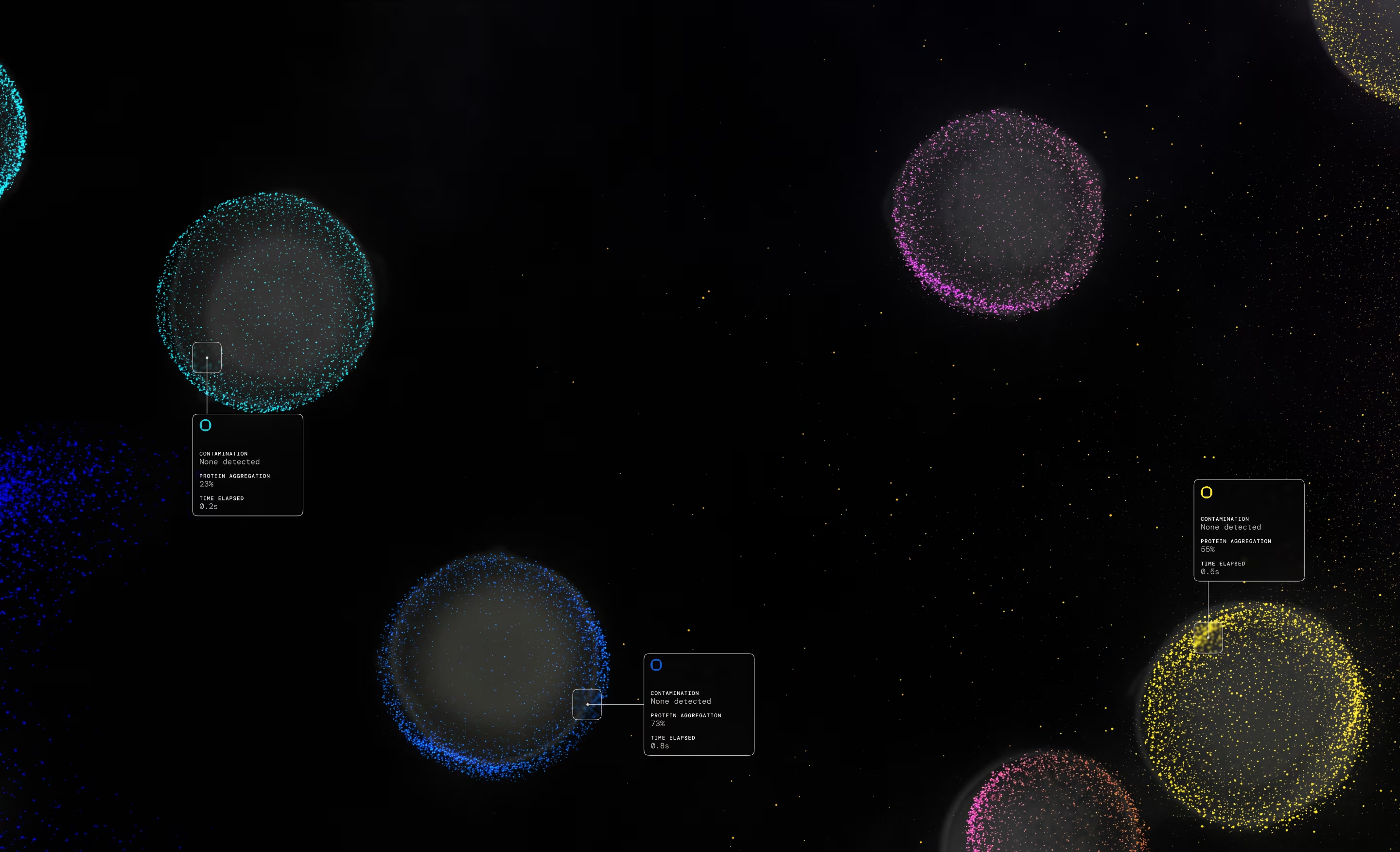
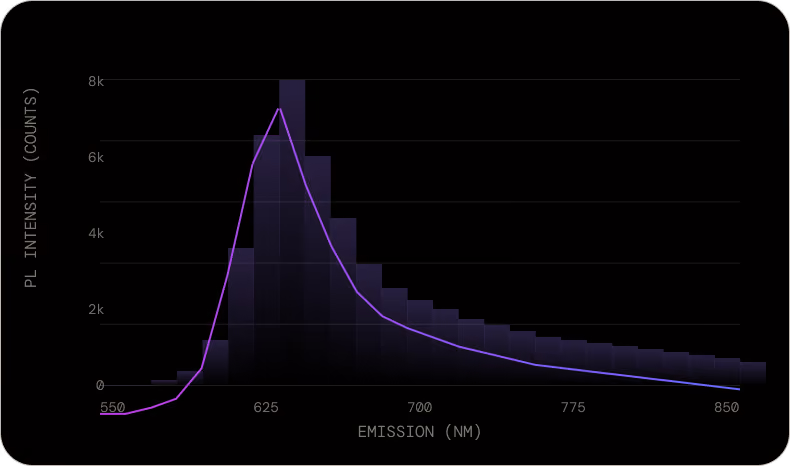
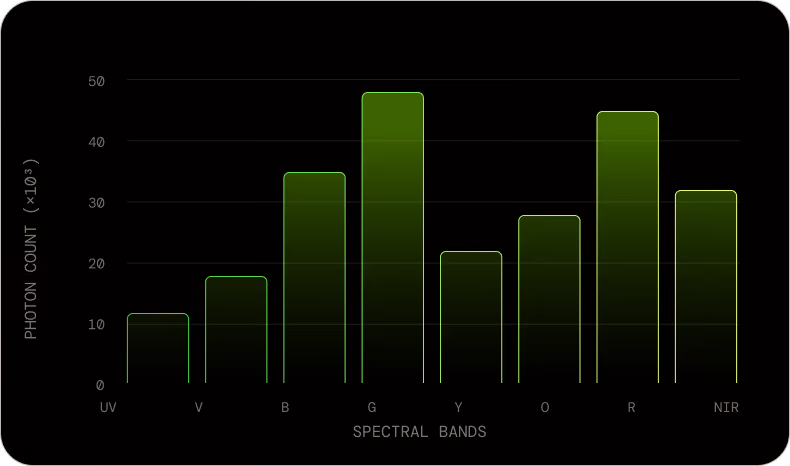
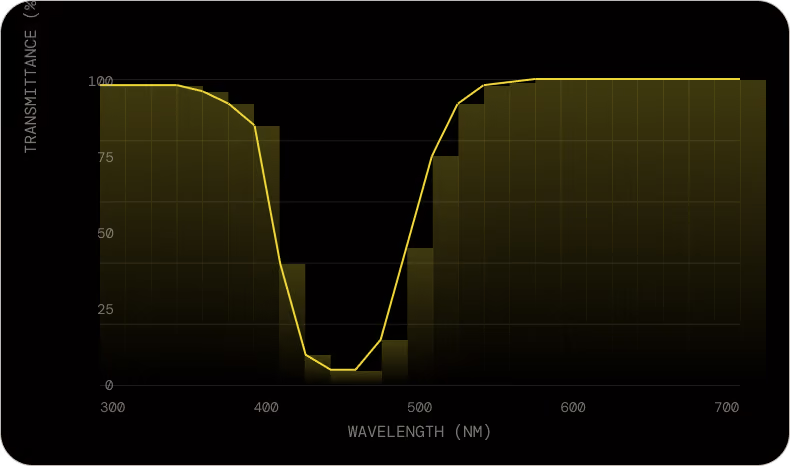
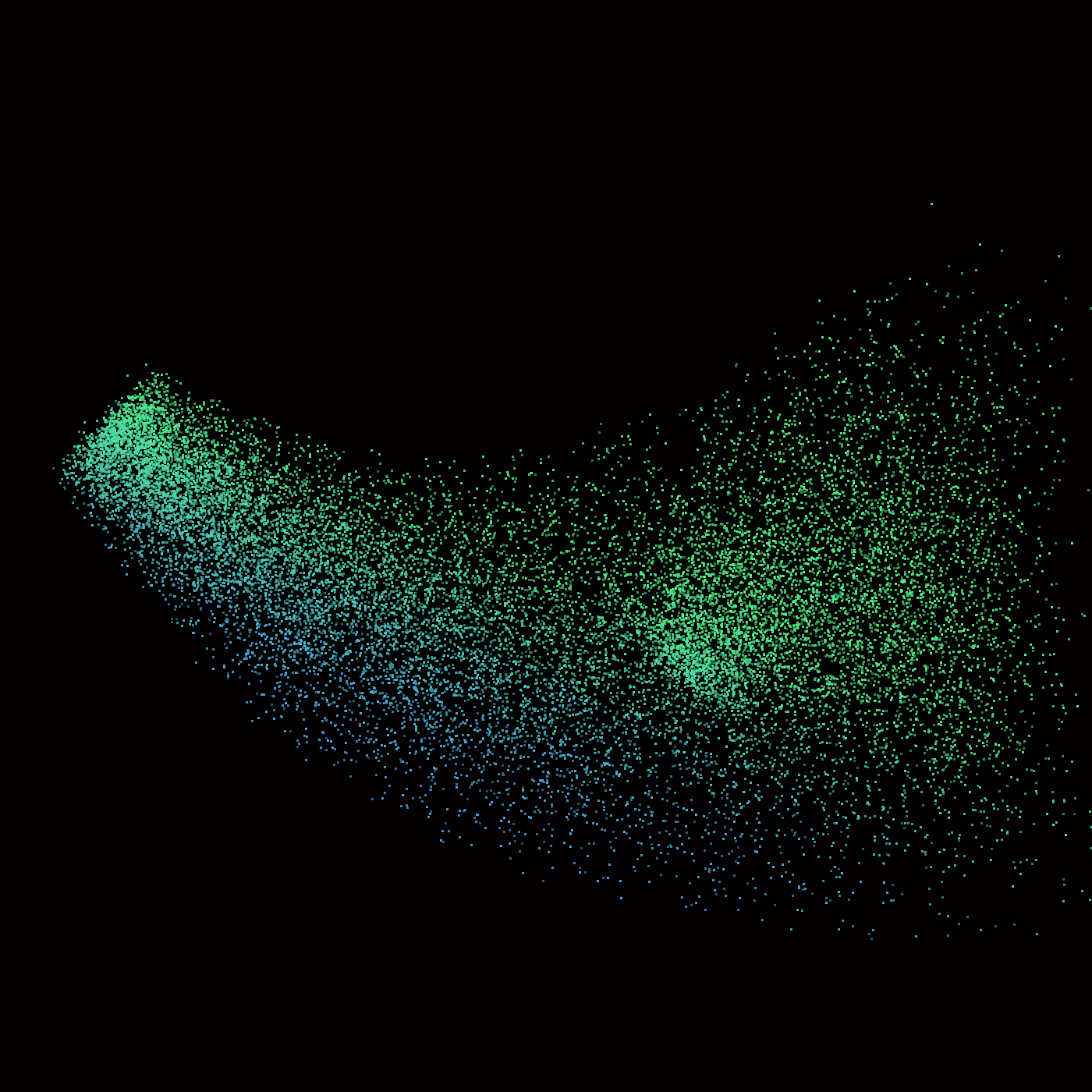
Every molecule: every pathogen, protein, contaminant, and compound, has a unique spectral fingerprint encoded in light. Spectroscopy has known this for over a century. What we lacked was a system fast enough and intelligent enough to read it in real time, across instruments, at scale.
LLMs learned language. CortX is the first spectral foundation model trained for the electromagnetic spectrum itself.
Physical AI describes systems that can perceive, reason about, and act in the physical world. Most Physical AI today addresses spatial perception i.e., where things are. CortX addresses the deeper layer: what things are made of. Molecular identity. Chemical state. Biological composition. The answer to the physical world is now readable in real time.

.avif)








Building the world’s largest spectral corpus
Step 1: Capture
Any sensor. Any modality. Any environment.
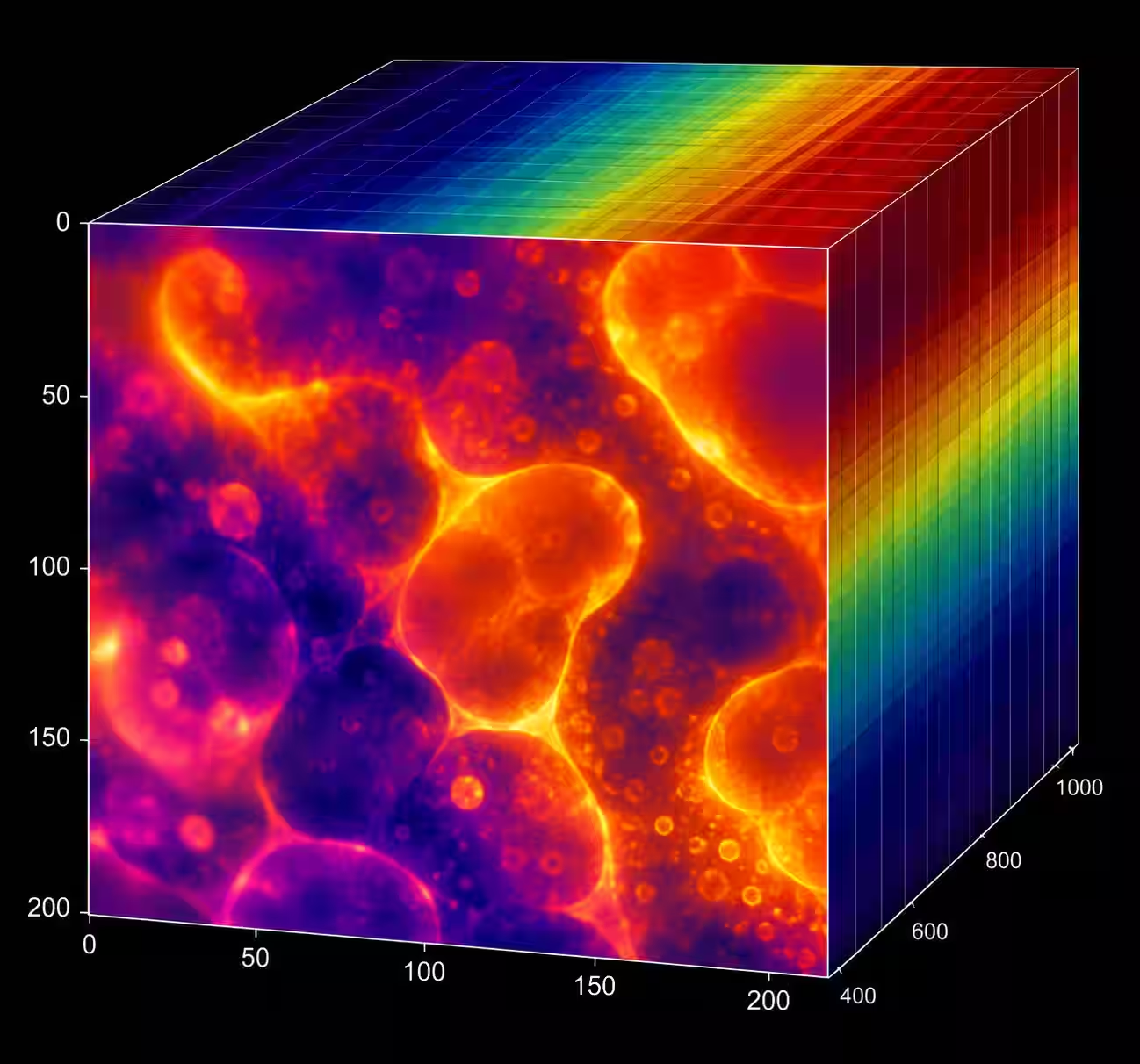
CortX integrates with Raman, near-IR, FTIR, mass spectrometry, fluorescence, hyperspectral imaging, liquid chromatography, UV-Vis, NMR, XPS and more across major third-party manufacturers via a hardware abstraction layer. It works with equipment you already own, deploying as a software intelligence layer over existing infrastructure.
Step 2: Infer
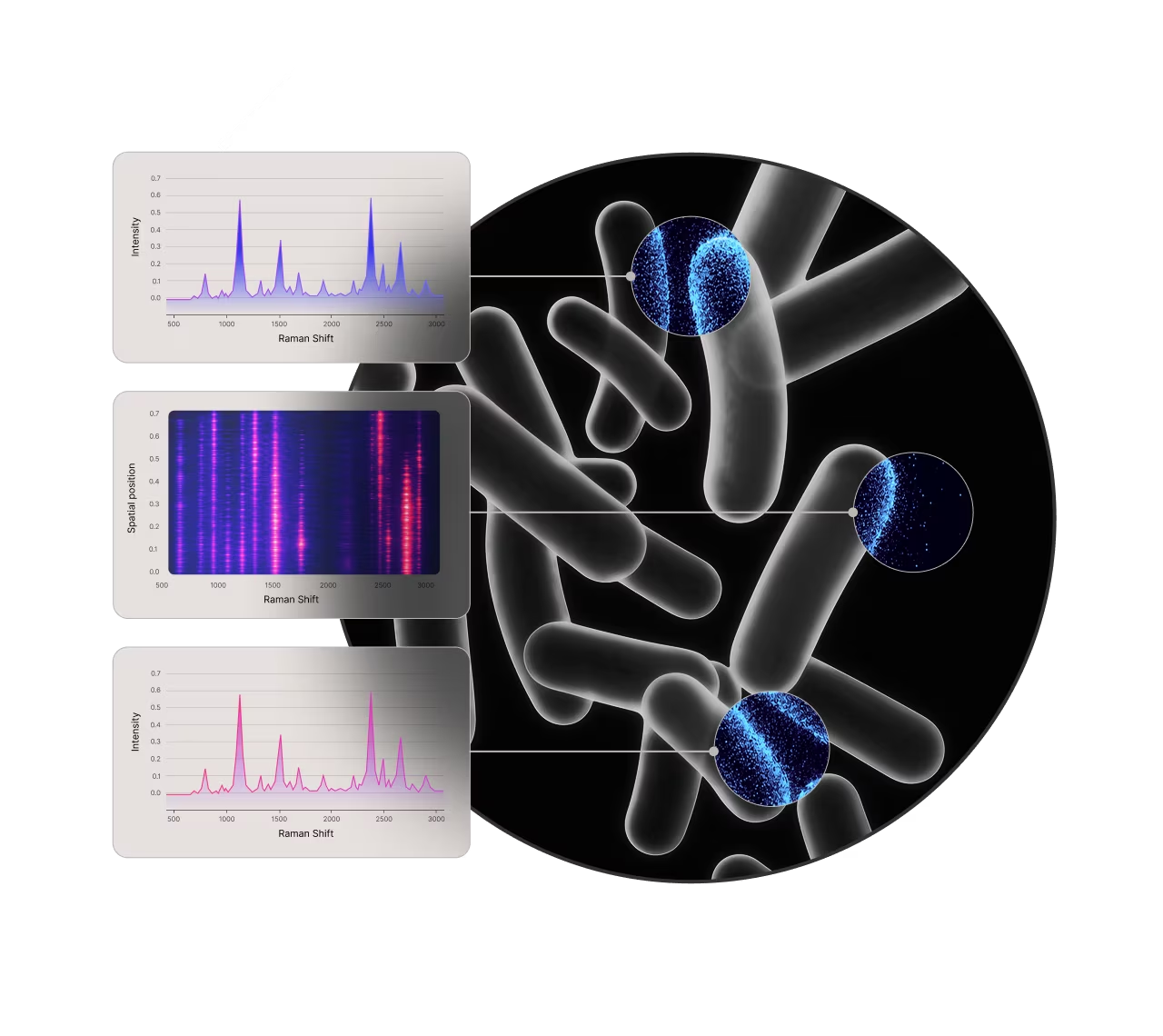
Raw spectral signal becomes molecular identity.
The inference layer translates spectral data into real-time intelligence. CortX reads the molecular composition, state, and identity of what the sensor is reading, no a priori knowledge required.

Step 3: Domain
Every scan sharpens the model across every domain.
CortX is cross-domain by design. Pathogen signatures learned in blood improve contamination detection in food, which improves early warning in a bioreactor.

Step 4: Trust
Decisions grounded in physical reality.
The output of CortX is an answer, grounded in the physical laws governing how matter interacts with light. The architecture is built around auditability and validation, meeting the bar required by clinical and regulatory bodies.

Existing applications
Solutions, ready to deploy
Pre-built means the model, the validation work, and the deployment path are already done. Each solution has been trained on domain-specific spectral data, tested against real-world samples, and proven in deployment. What's left is integration into your existing workflow.


Clinical diagnostics


Biomanufacturing


Food & supply chain

Defense & security


Quality control
One model, every spectrum
LLMs gave AI the ability to read and reason about text and imagery, the SFM gives AI the ability to read and reason about matter.
CortX is the foundation, the SFM is how researchers, scientists, engineers, and more interact with it directly. This means analyzing spectra, or identifying unknowns to explore what’s possible within one’s domain.
The SFM Is now available for pre-release access, free to qualified researchers and institutions

Turn a question into a deployable model in 48 hours
Traditional model development required months of manual data collection, compounded with iterative experimental design and specialist expertise to validate it. Thus, every new domain and sensor configuration, and their subsequent deployment, restarted the process.
We transform a scientific question into a validated AI model. It autonomously moves through feasibility analysis, experimental design, data collection, and model deployment while keeping the user in control of every decision that matters.

1
Market & Technical Analysis
2
Project Charter
3
Automated DOE Design
4
Automated Data Collection
5
AI-Driven Analysis
6
Deliverables & Deployment
7
Solution Build & Productization
8
Commercialization & Revenue